Cart

What Motorhome Owners Should Know Before Upgrading
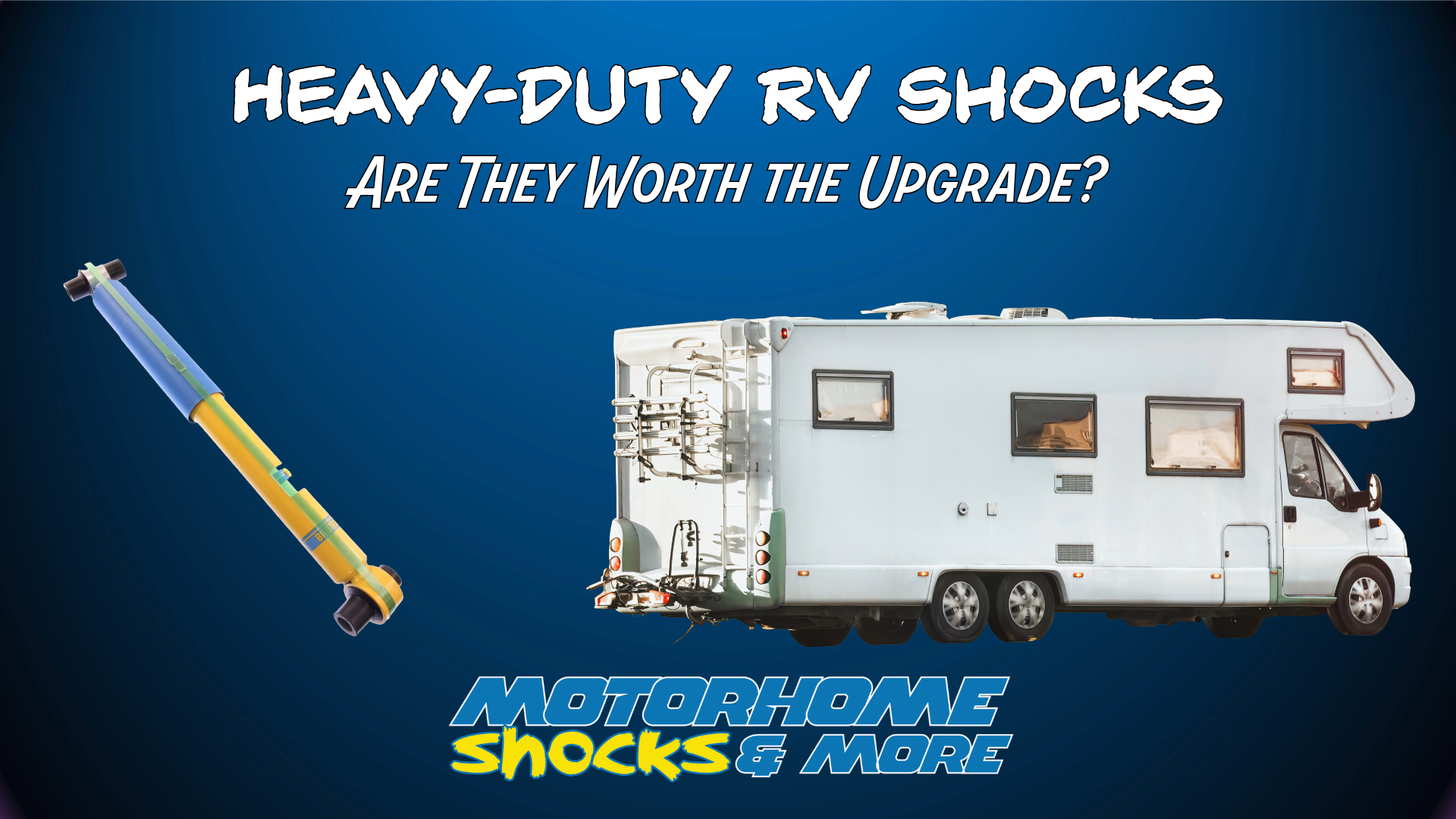
If your motorhome feels floaty after a dip, you’ve probably considered heavy-duty RV shocks. You may also notice repeated bouncing, front-to-rear pitching, or slow recovery after rough pavement.
A stronger shock sounds like the obvious solution. However, the best RV shock isn’t automatically the stiffest option available. The right choice depends on your chassis, travel weight, suspension condition, axle position, and primary handling complaint.
Heavy-duty shocks can be worthwhile when your motorhome needs better damping. They can help the coach settle faster after bumps and feel more controlled under its normal travel load. However, they can’t increase weight ratings, support worn springs, or repair loose steering parts.
This guide explains what heavy-duty shocks change, when they’re worth considering, and what they can’t correct. It’ll also help you compare your options before shopping for motorhome shocks and struts.
What Are Heavy-Duty RV Shocks?
A shock absorber controls how quickly the suspension compresses and rebounds. The motorhome’s springs support its weight, while the shocks control the movement those springs create.
When a tire crosses a bump, the spring compresses and releases stored energy. The shock moves hydraulic fluid through internal valves to slow that movement. This process helps the motorhome settle rather than continue bouncing.
The term “heavy-duty” can describe several shock characteristics, including:
- Application-specific damping for heavier vehicles
- A larger piston or shock body
- Stronger internal and external construction
- Improved heat management during repeated movement
- Valving designed for a motorhome’s weight and motion
- More consistent control under normal travel loads
Some heavy-duty RV shocks use monotube construction. Others use twin-tube designs, gas pressure, or selective damping technology. Construction matters, but it doesn’t determine the entire driving experience.
The shock must also match the chassis, axle, mounts, dimensions, and available suspension travel. A durable shock with improper application or damping can cause harshness or restrict proper movement.
💡 Fitment Tip: Don’t shop using only the motorhome’s exterior make, model, or floorplan. The chassis underneath the coach determines shock fitment.
Review our guide to finding motorhome shocks by chassis before comparing specific products.
Heavy-Duty Versus OE-Style RV Shocks
OE-style replacement shocks generally aim to restore the motorhome’s original damping and ride character. They can be appropriate when the coach drove well before the original shocks wore out.
Performance-oriented heavy-duty shocks usually provide more controlled damping than a basic replacement. They may suit motorhomes that feel undercontrolled, especially when carrying their regular travel load.
| Consideration | OE-Style Replacement | Heavy-Duty Performance Shock |
|---|---|---|
| Primary Goal | Restore familiar factory-style control | Increase control of body and suspension movement |
| Best Starting Point | The motorhome handled well when it was new | The coach feels floaty or slow to settle |
| Ride Character | Closer to the original setup | More controlled, depending on the application |
| Common Use | Routine replacement of worn shocks | Handling improvement or added damping control |
| Important Limitation | May not change an undercontrolled factory ride | Can’t correct unrelated suspension problems |
Performance doesn’t always mean harsh. A properly matched shock can control large body movements without making every small road imperfection uncomfortable.
Learn more about these differences in our guide to OE-style and performance motorhome shocks.
When Heavy-Duty RV Shocks May Be Worth It
Your Motorhome Keeps Bouncing After a Bump
A motorhome should move when its wheels cross a bump. The warning sign is continued movement after the original road input has passed.
Your coach may rise, fall, and continue cycling before finally becoming stable. This movement often becomes more noticeable when the motorhome is fully loaded for travel.
Passengers, water, fuel, tools, batteries, supplies, and hitch-mounted equipment all affect suspension demands. Properly matched shocks may help the coach settle faster under those conditions.
However, repeated bouncing can also involve worn springs, poor load distribution, or reduced suspension travel. Inspect the complete system before assuming the shocks are solely responsible.
Our guide explaining why motorhomes bounce after bumps can help you narrow down the cause.
You Feel Porpoising on Rolling Pavement
Porpoising is a front-to-rear pitching motion. The nose rises and falls after a dip, bridge approach, or rolling pavement.
The rear of the coach may then follow the same motion. A long motorhome can carry this movement through the living area once the road levels out.
Stronger damping can help control pitching when the existing shocks are worn or undercontrolled. It won’t correct an overloaded axle, sagging spring, or limited suspension travel.
The Coach Feels Floaty or Slow to Settle
A floaty motorhome can feel disconnected from the road. The body may continue moving after lane changes, dips, braking, or uneven pavement.
Heavy-duty shocks may reduce that delayed movement. The goal isn’t to make the suspension rigid. It’s to help the coach respond and settle more predictably.
Your Motorhome Faces Repeated Highway Inputs
One isolated bump doesn’t reveal everything about shock performance. Repeated pavement joints and rough surfaces can keep the suspension working continuously.
Braking, lane changes, wind, and uneven road surfaces create additional movement. A suitable heavy-duty shock may provide more consistent damping during these repeated inputs.
Your Motorhome Carries a Permanent Conversion
Class A, Class B, and Class C motorhomes place different demands on their suspension components. However, each carries substantial equipment that remains installed during every trip.
A Class B camper van may be smaller, but cabinets, water, appliances, batteries, and gear add constant weight. A Class C places a tall coach body behind its cutaway cab.
Large gas- and diesel-powered Class A motorhomes have substantial bodies and often have long overhangs. These permanent loads can make RV-specific damping more appropriate than a generic light-truck replacement.
What Heavy-Duty Shocks Won’t Fix
Motorhome owners sometimes use “sway” to describe several different movements. However, shocks can’t fix every problem related to motion or handling.
| What You Feel | Possible Problem | Start by Checking |
|---|---|---|
| Repeated bounce or pitching | Insufficient damping | Shock absorbers and mounts |
| Heavy leaning in turns | Weak roll control | Sway bars, bushings, and end links |
| Rear sideways movement | Lateral axle movement | Trac bar and suspension bushings |
| Constant steering correction | Directional stability problem | Tires, alignment, steering parts, and stabilizers |
| Sagging or bottoming | Insufficient load support | Springs, ride height, loading, and axle weight |
Body Roll
A sway bar connects the left and right sides of the suspension. It resists unequal suspension movement that causes the motorhome to lean.
If the coach leans heavily during turns or lane changes, inspect the sway bar and its hardware. Read our RV shocks versus sway bars guide before choosing an upgrade.
Tail Wag or Rear Axle Shift
A trac bar limits lateral movement between the axle and chassis on compatible platforms. It may help when the rear feels like it’s steering the coach.
A trac bar performs a different job than a shock absorber. Replacing shocks won’t directly secure unwanted side-to-side axle movement.
Steering Wander
Alignment, tire condition, tire pressure, steering linkage, and axle movement can all affect tracking. A steering stabilizer may reduce unwanted steering reactions in certain applications.
However, a stabilizer can’t repair loose or worn steering components. Diagnose and repair mechanical problems before installing an upgrade.
Sagging or Bottoming
Shocks control movement, but they don’t support the motorhome’s static weight. Sagging requires an inspection of springs, ride height, loading, and load-support components.
Overloading
No shock can increase your motorhome’s GVWR, GAWR, tire capacity, or legal payload. Weigh the coach in travel condition and correct overloading before adding suspension parts.
⚠️ Important: Suspension upgrades should improve a mechanically sound motorhome. They shouldn’t hide unsafe loading, damaged tires, broken springs, or worn steering parts.
Use the motorhome suspension solution guide to match your strongest symptom with the correct component.
How Shock Design Can Affect Performance
Heavy-duty RV shocks aren’t all built or tuned the same way. Understanding the main designs can make product comparisons easier.
Monotube Shocks
A monotube shock uses a single working cylinder. Its piston operates directly against the shock body’s inner surface.
This design can provide responsive damping and effective heat transfer. However, the final ride still depends on the shock’s application-specific valving.
Twin-Tube Shocks
A twin-tube shock uses an inner working tube and an outer reserve tube. This design can provide dependable control and ride comfort.
Twin-tube construction doesn’t automatically mean lower performance. A properly tuned twin-tube shock may be the better choice for a particular chassis.
Selective Damping Technology
Some shocks adjust their response according to suspension movement. This technology can provide one response to smaller road inputs and another to larger body movements.
Drivers seeking a balance between comfort and control may prefer this approach. Fitment and vehicle-specific tuning remain more important than the technology’s name.
You can compare different approaches in our Bilstein versus KONI motorhome shock guide. You can also browse our Bilstein motorhome shocks and KONI motorhome shocks.
What to Check Before Ordering Heavy-Duty RV Shocks
A shock upgrade works best when the rest of the suspension has a sound foundation. Complete these checks before ordering parts.
Weigh the Motorhome as You Travel
Weigh the coach with its usual passengers, fuel, water, food, tools, supplies, and towing equipment. Compare the axle weights with the applicable vehicle ratings.
An overloaded or poorly balanced coach needs a loading correction first. Load-support equipment can’t legally increase the manufacturer’s established weight ratings.
Check Tire Pressure Using Load Information
Tire pressure affects how road inputs reach the suspension. Excessive pressure may create a sharper ride, while insufficient pressure can increase heat and sidewall movement.
Use measured loads and the tire manufacturer’s load-and-inflation guidance. Don’t lower pressure below safe requirements to make the ride feel softer.
Inspect the Suspension and Steering
Have a qualified technician inspect the shocks, mounts, bushings, springs, steering components, and sway bar hardware. Look for leaks, dents, loose hardware, damaged mounts, and signs of bottoming.
Don’t crawl beneath an unsupported motorhome. A driveway bounce test also shouldn’t replace a complete inspection by a qualified technician.
Gather the Correct Fitment Details
Record the following information before shopping:
- Chassis manufacturer and model
- Chassis build year
- Motorhome model year
- Gross vehicle weight rating
- Front and rear axle ratings
- Front or rear installation position
- Drivetrain and suspension type
- Existing suspension modifications
- Tag axle information, when applicable
The motorhome’s chassis year may differ from its completed coach year. Front and rear shocks may also require different part numbers.
🔧 Ordering Tip: Take clear pictures of the chassis label and existing mounts. These details can help resolve uncertain fitment before you order.
Should You Replace One Axle or All Four Shocks?
Replace shocks in matched axle pairs. This approach keeps damping reasonably consistent on the left and right sides of the same axle.
A front-only replacement may work when the rear shocks are newer and the strongest symptoms begin at the steering axle. Rear-only replacement may make sense if the house section continues to bounce while the front remains controlled.
A complete set is often appropriate when all shocks share the same age and wear. It may also help when porpoising moves through the entire motorhome.
Our guide to replacing front versus rear motorhome shocks explains these options in greater detail.
Follow the shock manufacturer’s installation instructions, hardware requirements, and torque procedures. Check for proper clearance before completing the installation.
After installation, test the motorhome carefully on familiar roads. Look for quicker settling, less float, and a more predictable response after bumps.
If leaning, sideways movement, or steering correction remains, diagnose that symptom separately. One upgrade may reveal another issue that requires a different component.
Are Heavy-Duty RV Shocks Worth the Cost?
Heavy-duty RV shocks can be worth the cost when inadequate damping is the main problem. The strongest candidates bounce repeatedly, porpoise, feel floaty, or recover slowly after road inputs.
The expected improvement should remain practical. Properly matched shocks may provide quicker settling, reduced follow-up movement, and a calmer highway ride.
They won’t turn a motorhome into a passenger car. They also can’t guarantee that every ride or handling complaint will disappear.
Heavy-duty shocks may not be your first priority when the coach is overloaded or sits too low. They also won’t correct loose steering parts, poor alignment, or weak roll control.
Start with your strongest symptom and confirm the suspension’s mechanical condition. Then choose between OE-style replacement and performance damping based on the result you want.
Find Heavy-Duty Shocks for Your Motorhome
Heavy-duty RV shocks can reduce repeated bounce, porpoising, float, and slow recovery when they’re correctly matched. They’re especially useful when a mechanically sound motorhome needs stronger control under its regular travel load.
The correct shock must match your chassis, axle position, weight rating, mounting style, and suspension configuration. Choosing based on the exterior model alone can lead to poor fitment or disappointing performance.
When you’re ready to improve your ride, shop the Motorhome Shocks & More shocks and struts collection. You can also contact our suspension specialists for help confirming the right fit. We’ll help you choose a properly matched option that makes your motorhome feel calmer, more controlled, and easier to enjoy.