

Cart

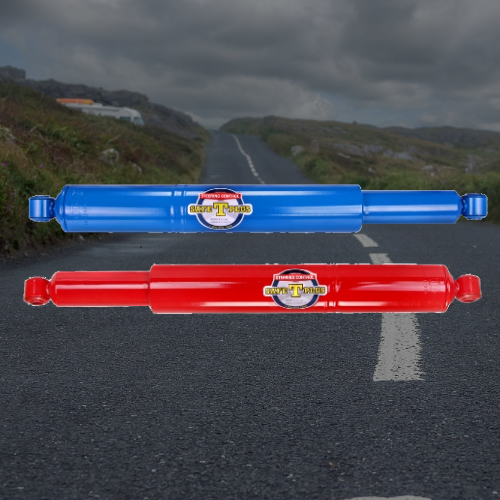
Many RV owners struggle to keep their motorhome steady on the highway. Crosswinds, pavement ruts, crowned roads, and passing semi-trucks can make it feel like you’re constantly fighting the steering wheel. After several hours behind the wheel, those small corrections can become exhausting.
A Safe T Plus steering stabilizer is designed to reduce unwanted steering movement and help the motorhome return toward the center. However, no single suspension upgrade can correct every handling problem. Before buying one, it helps to understand what Safe T Plus does, which problems it can improve, and which problems require a different repair or upgrade.
What Does a Safe-T-Plus Steering Stabilizer Do?
Safe T Plus is a positive-centering steering control designed for motorhomes, buses, trucks, and other heavy vehicles. It combines hydraulic resistance with an internal spring that helps keep the front wheels pointed straight ahead.
A basic factory steering damper primarily slows sudden steering movement. Safe T Plus adds centering force, which helps the steering return to its neutral position after wind, road irregularities, or driver input moves the wheels off-center.
When properly selected, installed, and centered, a Safe T Plus can help with several common RV driving complaints:
- Road wandering: Helps the motorhome track more consistently instead of drifting across the lane.
- Steering fatigue: Reduces the number of small corrections needed during long highway drives.
- Oversteering: Helps prevent the driver from making corrections that are larger than necessary.
- Crosswind movement: Adds resistance when side winds try to push the front wheels off course.
- Passing-truck influence: Helps the driver manage the steering response caused by air pressure from large vehicles.
- Rut tracking: Helps resist the tendency of the front tires to follow grooves worn into the pavement.
- Sudden steering movement: Adds control when a pothole, pavement edge, or other road hazard forces a front wheel to move.
- Front tire blowout response: Helps resist the abrupt pull that can occur after a front tire failure.
Safe T Plus can make the steering feel firmer and more controlled. It shouldn’t make normal steering difficult when the correct unit is installed and adjusted properly.
Does Safe T Plus Actually Improve RV Handling?
Safe T Plus can provide a noticeable improvement when unwanted steering movement is the primary issue. Many drivers notice that the motorhome holds its line better and requires fewer corrections after installation.
The improvement is often most noticeable on long highway trips. Instead of continuously moving the wheel left and right, the driver can make smaller, more deliberate corrections. That can reduce physical strain and help the motorhome feel more predictable.
Results still depend on the motorhome’s existing condition. A steering stabilizer works best when the tires, alignment, steering linkage, suspension components, and weight distribution are already in good condition.
| Driving Problem | Can Safe T Plus Help? | What Else Should Be Checked? |
|---|---|---|
| Constant steering corrections | Yes, especially when the steering needs more centering control | Alignment, tire pressure, steering linkage, and weight distribution |
| Crosswind sensitivity | Yes, it can help resist unwanted steering movement | Sway bars, shocks, ride height, and coach loading |
| Movement from passing trucks | Yes, when the movement affects steering direction | Rear trac bar, sway bars, shocks, and suspension bushings |
| Loose or delayed steering response | Sometimes, but it won’t repair worn components | Tie rods, bell cranks, drag links, steering gear, and ball joints |
| Excessive bouncing or porpoising | No, this is primarily a shock or spring-control issue | Shocks, springs, air bags, and weight distribution |
| Body roll in turns | Not directly | Sway bars, sway bar bushings, shocks, and springs |
What Safe T Plus Won’t Fix
A steering stabilizer shouldn’t be used to cover up worn steering or suspension parts. If the motorhome has excessive steering play, uneven tire wear, vibration, clunking, or a strong pull, inspect the underlying components first.
Safe T Plus also won’t make a rough suspension ride softer. It can reduce the steering-wheel movement caused by rough pavement, but it doesn’t replace the shocks or control vertical suspension motion.
Before installing a steering stabilizer, check the following:
- Front tire condition and pressure
- Alignment, including caster and toe settings
- Steering gear and linkage condition
- Tie rods, drag links, bell cranks, and ball joints
- Wheel bearings and suspension bushings
- Front and rear axle weights
- Motorhome weight distribution
- Existing steering damper condition
If the motorhome has a mechanical problem, that problem should be repaired before adding a steering stabilizer. The best results come from installing Safe T Plus on a properly maintained and aligned chassis.
Who Benefits Most From a Safe T Plus?
Safe T Plus is useful for RV owners who experience frequent steering corrections, rut tracking, wind sensitivity, or a lack of on-center steering feel. It’s available for a wide range of Class A, Class B, and Class C motorhome chassis.
Common applications include Ford F-53 gas Class A motorhomes, Ford E-Series Class C motorhomes, Freightliner chassis, Workhorse chassis, Spartan chassis, and several other motorhome platforms. However, the correct stabilizer and mounting hardware depend on the exact chassis configuration.
You may benefit from Safe T Plus if:
- You regularly drive on highways with strong or changing crosswinds.
- Passing semi-trucks push the motorhome off its intended path.
- The front tires tend to follow grooves or ruts in the road.
- You make frequent steering corrections even on relatively straight roads.
- You want additional steering control during a front-tire emergency.
- Long drives leave your arms, shoulders, or hands tired.
- Your motorhome’s steering system is in good condition but still feels too light.
Who Might Not Need One?
Not every motorhome needs a Safe T Plus. If your RV already tracks straight, feels stable in wind, and requires very little steering correction, the improvement may be less noticeable.
You also shouldn’t start with a steering stabilizer if the motorhome has obvious mechanical problems. A worn tie rod end, incorrect tire pressure, or poor alignment can cause wandering that a stabilizer can’t properly correct.
Safe T Plus may not be the first upgrade to choose when the main complaint is:
- Excessive bouncing after dips
- Front-to-rear porpoising
- Harsh impacts over expansion joints
- Side-to-side body roll in turns
- Rear axle movement or a tail-wagging sensation
- Uneven tire wear or a constant pull to one side
Those symptoms may point toward shocks, sway bars, springs, a rear trac bar, alignment work, or steering repairs.
Safe T Plus vs Other RV Handling Upgrades
Steering stabilizers, sway bars, shocks, and trac bars affect different parts of the motorhome. Choosing the right upgrade starts with identifying exactly what the coach is doing.
| Upgrade | Primary Purpose | Best For |
|---|---|---|
| Safe T Plus | Adds hydraulic resistance and positive centering | Wandering, oversteering, rut tracking, wind, and steering fatigue |
| Basic steering damper | Slows abrupt steering movement | Road shock and steering kickback |
| Sway bar | Reduces side-to-side body roll | Leaning in turns, wind-related rocking, and driveway transitions |
| Rear trac bar | Limits side-to-side axle movement | Tail wag, rear-steer sensation, and movement from passing trucks |
| RV shocks | Control suspension movement | Bouncing, porpoising, repeated movement, and poor recovery after bumps |
Some motorhomes need more than one upgrade because they have multiple handling problems. For example, Safe T Plus may reduce steering corrections while a rear trac bar controls side-to-side axle movement. Upgraded shocks or sway bars may then address bouncing and body roll.
How to Choose the Correct Safe T Plus
Safe T Plus stabilizers aren’t universal. The correct unit depends on the motorhome’s chassis, model, year, gross vehicle weight rating, steering configuration, and sometimes the tie rod diameter.
The name printed on the motorhome’s exterior isn’t enough to confirm fitment. Two coaches with similar floor plans may use different chassis or steering components.
Before ordering, collect the following information:
- Motorhome year, make, and model
- Chassis manufacturer and chassis model
- Gross vehicle weight rating
- VIN or chassis identification information
- Tie rod diameter when required
- Any existing aftermarket steering or suspension upgrades
Safe T Plus systems generally require both the steering control unit and a vehicle-specific mounting hardware kit. Don’t assume that the stabilizer cylinder includes every bracket needed for your motorhome.
Installation and Centering Matter
Safe T Plus uses a bolt-on installation on many supported applications. Installation may not require welding, drilling, or wiring, but the exact process and torque specifications vary by mounting kit.
The motorhome should be parked with the wheels pointed straight ahead before the stabilizer is positioned. After installation, the system must be checked for clearance throughout the full steering range.
A road test and final centering adjustment are also important. If the motorhome pulls after installation, the stabilizer may need to be repositioned. However, a continuing pull can also indicate an alignment, tire, brake, or suspension problem.
If you’re unsure about the installation, use a technician experienced with RV steering systems. Incorrect bracket placement or improper tightening can affect clearance and steering operation.
Is Safe T Plus Worth the Cost?
Safe T Plus costs more than a basic steering damper because it provides both hydraulic control and positive centering. For an RV owner who regularly fights the steering wheel, the reduction in corrections and fatigue can make the upgrade worthwhile.
Its value also depends on how you use the motorhome. Someone who takes several long highway trips each year may notice more benefit than an owner who only drives short distances at low speeds.
Safe T Plus is most likely to be worth the investment when:
- The motorhome wanders despite having good tires and proper alignment.
- Crosswinds and passing trucks require frequent steering corrections.
- The driver becomes tired from holding the RV in the center.
- The steering feels too light or reacts too quickly to road conditions.
- You want additional steering control during a front tire blowout.
Safe T Plus Steering Stabilizer FAQs
Will Safe T Plus stop my motorhome from swaying?
It can help control the steering response caused by wind or passing trucks, but it doesn’t directly control body roll. If the coach leans or rocks from side to side, inspect the sway bars, shocks, springs, and suspension bushings.
Will Safe T Plus fix loose steering?
It may make the steering feel firmer, but it won’t repair worn steering components. Excessive play should be traced to the steering gear, tie rods, drag link, bell cranks, ball joints, or other chassis parts.
Does Safe T Plus improve a rough ride?
It can reduce sudden steering-wheel movement on rough pavement, but it won’t soften suspension impacts. Rough ride, bouncing, and porpoising usually require attention to the shocks, springs, tire pressure, or suspension setup.
Do I need an alignment before installing Safe T Plus?
The motorhome should track correctly before installation. If it pulls, wears tires unevenly, or has an off-center steering wheel, have the tires, alignment, and steering system inspected first.
Does Safe T Plus include the mounting kit?
The steering control unit and vehicle-specific mounting hardware are often listed separately. Confirm both part numbers before ordering.
Can Safe T Plus prevent an accident during a tire blowout?
No steering product can guarantee the outcome of a tire failure. Safe T Plus is designed to resist the sudden steering pull associated with a front tire blowout, giving the driver additional control while safely slowing the motorhome.
Final Thoughts: Should You Install Safe T Plus?
A Safe T Plus steering stabilizer can be a worthwhile upgrade when your motorhome wanders, follows road ruts, reacts strongly to crosswinds, or requires constant steering corrections. It can create a firmer on-center feel and make long highway drives less tiring.
It won’t replace proper alignment, good tires, sound steering components, or other suspension upgrades. The first step is to identify whether the problem stems from steering movement, body roll, bouncing, axle movement, or worn parts.
If steering control is the main complaint, shop Safe T Plus steering stabilizers and mounting kits at Motorhome Shocks & More. Have your motorhome and chassis information ready so our team can help you confirm the correct stabilizer and mounting hardware before you order.


