

Cart

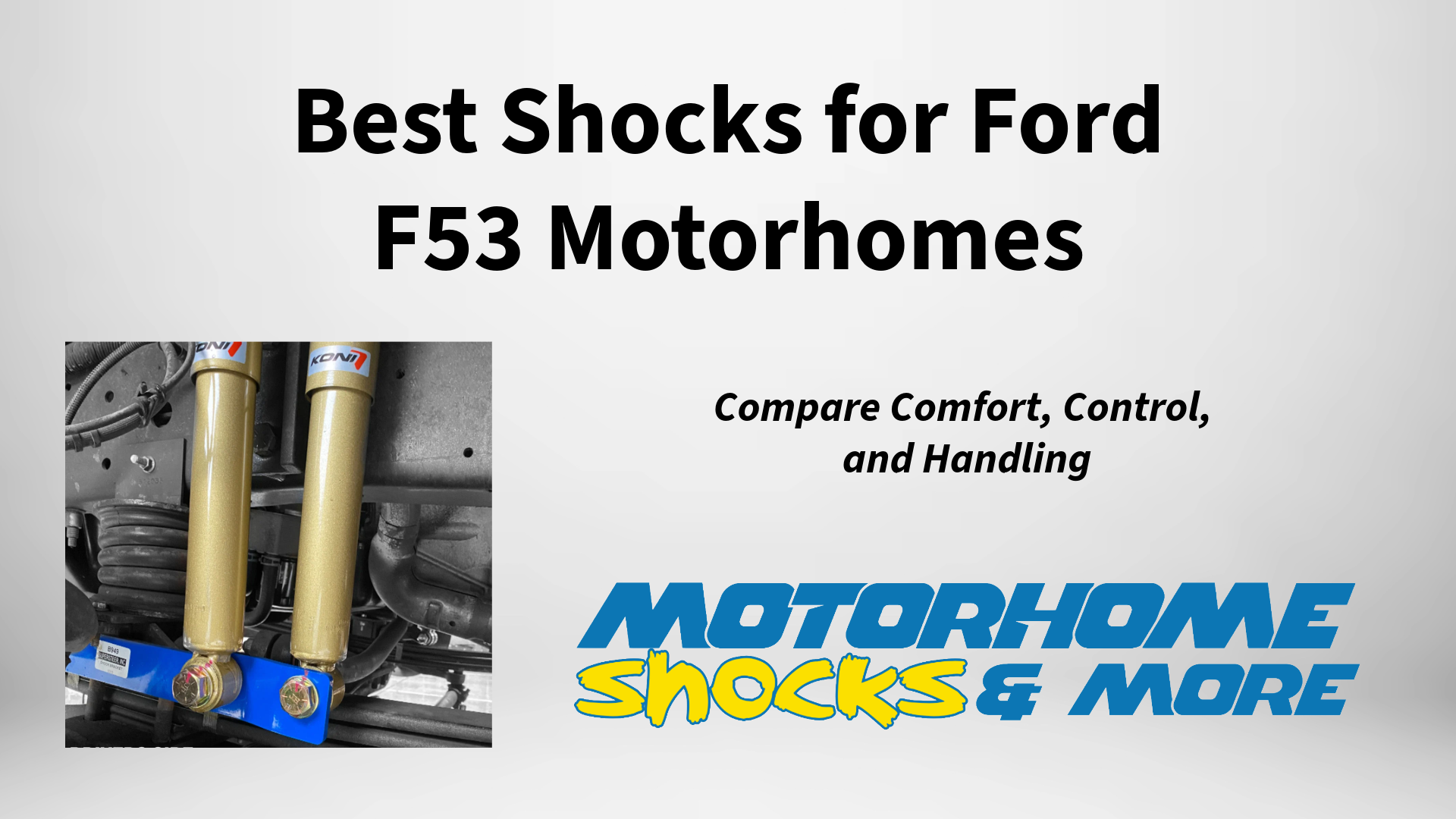
Find the Right Balance of Comfort, Stability, and Control
Ford F53 owners often start researching shocks after the same driving frustrations become difficult to ignore. The motorhome may bounce repeatedly after bridge joints, feel unsettled on rough pavement, lean heavily through ramps, or require constant steering corrections on windy highways.
These complaints are common because the Ford F53 chassis supports a large and heavy Class A motorhome body. The tall profile, long wheelbase, coach weight, storage layout, and travel load can all influence how the motorhome reacts to bumps, dips, turns, and crosswinds.
If you’re searching for the best shocks for Ford F53 motorhome applications, there isn’t one universal answer for every coach. The right shocks depend on your model year, gross vehicle weight rating, coach configuration, current suspension condition, and preferred ride quality.
Some owners want a firmer, more planted driving experience. Others want better motion control without making sharp pavement impacts feel harsher. Many drivers want a balanced combination of comfort and stability.
This guide explains what shocks can improve, which common F53 problems may require other suspension upgrades, and how to choose the right setup for your motorhome.
💡 Important: Always select suspension parts according to the chassis under the motorhome, not only the coach manufacturer or model name. Two motorhomes with similar floor plans may use different chassis configurations or weight ratings.
Why Ford F53 Motorhomes Often Need Suspension Upgrades
The Ford F53 is one of the most widely used gasoline Class A motorhome chassis. It provides the foundation needed to support a large coach body, drivetrain, tanks, appliances, storage compartments, passengers, and cargo.
However, a motorhome places different demands on a chassis than a standard passenger vehicle. A Class A coach has a high center of gravity and a large side profile. Wind, passing trucks, uneven pavement, and weight distribution can therefore have a noticeable effect on handling.
The completed motorhome’s driving characteristics also depend on how the coach builder uses the chassis. Body length, rear overhang, wheelbase, tank placement, storage locations, and axle loading can all change the way an F53 responds.
That’s why two owners with the same basic chassis may report very different problems. One motorhome may struggle primarily with porpoising. Another may feel harsh over expansion joints. A third may experience body roll, steering wander, or rear axle movement.
Common Ford F53 complaints include:
- Repeated bouncing after bridge joints or pavement dips
- Front-to-rear pitching, commonly called porpoising
- Excessive body roll in turns and highway ramps
- Harsh reactions to potholes and expansion joints
- Steering fatigue in crosswinds or around passing trucks
- A floaty, busy, or under-controlled highway feel
- Side-to-side rocking that continues after a road input
These symptoms don’t always point to shocks alone. However, shocks are often one of the most effective starting points when excessive suspension movement is the primary complaint.
What Shocks Actually Do on a Ford F53
Shock absorbers control the movement created by the motorhome’s springs and suspension. They don’t support the coach’s weight, increase load capacity, or replace worn steering components.
Instead, shocks slow and control suspension movement after the tires encounter a bump, dip, pothole, or other road input. Without effective damping, the suspension can continue moving after the initial impact has passed.
Quality shocks can help improve:
- Repeated bouncing after bumps and bridge transitions
- Fore-and-aft pitching or porpoising
- Side-to-side rocking after uneven road inputs
- Slow recovery after dips and pavement changes
- A floaty or disconnected highway feel
- Overall vehicle composure and predictability
- Driver fatigue caused by excessive body movement
Shocks are especially relevant when the motorhome continues bouncing, pitching, or rocking after the road has already leveled out.
⚠️ Keep in Mind: Shocks can help the coach settle after it begins leaning or rocking. However, they don’t replace the roll resistance provided by sway bars or the lateral axle control provided by a trac bar.
Common Ford F53 Problems and the Upgrades to Investigate
Choosing the best suspension upgrade becomes easier when you match the part to the symptom. The table below provides a practical starting point.
| Driving Complaint | What You May Notice | Upgrade to Investigate |
|---|---|---|
| Porpoising | The front and rear continue pitching after dips or bridge joints. | Heavy-duty motorhome shocks |
| Repeated bouncing | The coach continues moving after the initial road impact. | Shocks and suspension inspection |
| Body roll | The motorhome leans heavily through turns or ramps. | Sway bars, with shocks supporting faster settling |
| Rear axle movement | The rear feels like it shifts sideways or steers the coach from behind. | Rear trac bar |
| Steering wander | Frequent corrections are needed to keep the coach centered. | Alignment, steering inspection, or steering stabilizer |
| Sag or bottoming | The coach rides low or reaches its suspension stops. | Springs or load-support components |
Porpoising Over Dips and Bridge Joints
Porpoising describes the repeated front-to-rear pitching that can occur after a large dip, bridge transition, or rolling section of pavement. The front rises and falls, followed by the rear, creating a motion similar to a boat moving through waves.
If this motion continues longer than it should, the shocks may not be providing enough damping. Worn shocks can make the problem worse, but even usable original shocks may not provide the control some heavily loaded coaches need.
A Harsh but Under-Controlled Ride
Some F53 owners report a frustrating combination. The motorhome feels sharp and uncomfortable over broken pavement, yet it still bounces or rocks afterward.
This can happen when the suspension transmits the initial impact into the coach but doesn’t recover cleanly. Better shock tuning may improve the recovery phase. However, tire pressure, axle weight, worn suspension components, and loading should also be reviewed.
Excessive Sway in Turns or Crosswinds
Body roll occurs when the coach leans from side to side. Shocks can slow this movement and help the motorhome settle, but sway bars provide the primary resistance to body roll.
If leaning is the biggest complaint, upgrading the sway bars may produce a more direct improvement than changing shocks alone. Many owners still combine sway bar improvements with better shocks for more complete control.
Steering Fatigue Around Trucks and Wind
A motorhome that requires constant steering corrections can become exhausting during long highway trips. Crosswinds, road crowns, passing trucks, alignment problems, rear axle movement, and worn steering parts can all contribute.
Better shocks may reduce the body motion that accompanies these events. However, a steering stabilizer, rear trac bar, alignment service, or mechanical inspection may be needed to address the main cause.
Shock Characteristics Ford F53 Owners Should Compare
Brand name is only one part of choosing shocks. You should also compare how each option is designed to control a heavy motorhome and how that tuning matches your preferred driving experience.
Overall Damping Strength
Drivers who dislike a floaty or slow-to-settle coach often prefer stronger damping. A firmer shock can provide a more planted and disciplined response, especially during large suspension movements.
However, more firmness isn’t automatically better. An overly aggressive setup may transmit more pavement impact into the coach, particularly on lighter F53 applications.
Comfort and Control Balance
Some shocks are designed to provide stronger control during large body movements while remaining more compliant during smaller, faster road inputs.
This type of balance may appeal to owners who want less pitching and body motion without making every pavement seam feel sharper.
Monotube Versus Frequency-Selective Designs
High-pressure monotube shocks are often chosen for consistent damping, heat management, and a firm, responsive feel. Bilstein B6 4600 shocks are a common example of this design approach.
KONI Frequency Selective Damping technology takes a different approach. It changes damping behavior according to the frequency of suspension movement. This helps provide control during slower body movements while allowing more compliance over smaller road irregularities.
Front and Rear Matching
A complete matched set is generally the best approach when all four shocks are similar in age and condition. Matching the front and rear helps the entire coach respond more consistently.
Replacing only one axle may still make sense when the other shocks were recently installed or when the front and rear require different troubleshooting. However, the remaining shocks should always be inspected.
Coach Weight and Travel Loading
A lightly loaded weekend motorhome doesn’t place the same demands on its shocks as a fully loaded coach carrying full tanks, extensive cargo, and towing equipment.
Heavier coaches usually expose weak damping sooner. Actual axle weights can also reveal whether the coach is overloaded or unevenly loaded, which shocks cannot correct.
🔧 Pro Tip: Before blaming every ride problem on the shocks, confirm tire condition, tire pressure, axle loading, alignment, suspension bushings, and steering components. A new shock cannot correct an overloaded axle or worn mechanical part.
Popular Shock Options for Ford F53 Motorhomes
Ford F53 owners frequently compare Bilstein and KONI shocks. Both brands offer motorhome-focused options, but they provide different driving characteristics.
Exact availability and fitment vary by chassis year, GVWR, axle configuration, and coach application. Always confirm the correct part numbers before ordering.
| Shock Family | General Driving Character | May Be Best For |
|---|---|---|
| Bilstein B6 4600 | Firm, responsive, and control-focused monotube damping | Owners prioritizing reduced float, stronger control, and highway composure |
| KONI FSD | Balances body control with compliance over smaller road inputs | Owners seeking a balance between comfort and stability |
| KONI EVO and EVO99 | Heavy-duty damping designed for the demands of larger Class A coaches | Compatible with heavier motorhome applications requiring stronger motion control |
Bilstein B6 4600 Shocks
Bilstein B6 4600 shocks use a high-pressure monotube design with digressive valving. They’re commonly associated with a firm, responsive, and controlled feel.
This option may appeal to drivers who want to reduce float, improve suspension recovery, and create a more connected highway experience. However, drivers who are highly sensitive to sharp pavement impacts may prefer a more comfort-oriented design.
KONI FSD Shocks
KONI FSD shocks use Frequency Selective Damping technology to react differently to various suspension movements. The design aims to provide greater control during larger, slower body movements while allowing more compliance during smaller, faster road inputs.
This can make KONI FSD appealing to owners who want improved handling without choosing the firmest possible ride.
KONI EVO and EVO99 Shocks
KONI EVO and EVO99 shocks are designed for the weight and demands of large Class A motorhomes. Compatible applications may benefit from stronger damping capacity, improved pitching control, and more confident handling.
These shocks aren’t a universal fit for every F53. The model year, GVWR, axle position, and specific chassis configuration must be verified before ordering.
⚠️ Fitment Warning: Never order shocks using only the motorhome’s exterior model name. Verify the Ford F53 chassis year, GVWR, front and rear position, and any relevant suspension changes.
Why Model Year, GVWR, and Coach Configuration Matter
The Ford F53 isn’t a single one-size-fits-all platform. Ford has produced the chassis across many years and several weight ratings. The appropriate shock can change according to these specifications.
Two motorhomes from the same manufacturer may also have different chassis years. Coach builders sometimes complete and title the motorhome after the underlying chassis was manufactured.
Before ordering shocks, gather the following information:
- Motorhome year, manufacturer, and model
- Ford chassis model year
- Gross vehicle weight rating
- Front gross axle weight rating
- Rear gross axle weight rating
- Engine configuration when relevant
- Front or rear shock position
- Existing suspension modifications
You can learn more about identifying the correct platform in the Motorhome Shocks & More RV chassis identification guide.
When Shocks Alone May Not Be Enough
Shocks are important, but the Ford F53 often responds best when upgrades are selected according to the specific handling problem.
Sway Bars
Sway bars resist body roll and side-to-side leaning. They’re often the more direct upgrade when the motorhome leans excessively through turns, ramps, or crosswinds.
Shocks can complement sway bars by controlling how quickly the suspension moves and settles. However, they don’t provide the same type of roll resistance.
Rear Trac Bars
A rear trac bar helps control lateral axle movement. It may be helpful when the rear of the coach feels like it shifts sideways, reacts dramatically to passing trucks, or causes a tail-wagging sensation.
This movement can create steering corrections even though the problem originates at the rear axle.
Steering Stabilizers
A steering stabilizer helps the steering return toward center and may reduce the amount of correction required during crosswinds, road crown changes, and passing-truck turbulence.
It should be installed only after confirming that the steering system, alignment, tires, and suspension components are in safe working condition.
Springs and Load-Support Components
If the motorhome sags, bottoms out, or carries too much weight on one axle, shocks aren’t the complete solution. Springs and load-support components manage weight and ride height, while shocks control movement.
Load-support products also don’t increase the chassis, axle, wheel, or tire weight ratings. The motorhome must remain within every manufacturer rating.
For a broader overview, read Best Suspension Upgrades for the Ford F53 Chassis.
How to Choose the Best Shocks for Your Ford F53
-
Identify your main complaint.
Decide whether the biggest problem is porpoising, repeated bouncing, harsh pavement reaction, body roll, steering wander, or rear axle movement. -
Inspect the complete suspension.
Check for leaking or damaged shocks, worn bushings, loose steering components, uneven tire wear, sagging springs, and other mechanical problems. -
Confirm the chassis specifications.
Use the chassis year, GVWR, axle ratings, and shock position to verify the correct application. -
Consider the motorhome’s travel weight.
Think about passengers, cargo, full tanks, rear storage, towing equipment, and how the coach is normally loaded. -
Choose your preferred ride character.
Decide whether you prefer firm and direct control or a more comfort-focused balance. -
Determine whether another upgrade is needed.
Shocks are ideal for motion control. Sway bars, trac bars, steering stabilizers, and springs address different problems.
What Results Should You Expect?
New shocks won’t make a large gas Class A motorhome drive like a luxury passenger car. The vehicle will still have a high center of gravity, substantial weight, a large side profile, and commercial-style chassis characteristics.
A correctly matched shock upgrade can still provide meaningful improvements, including:
- Less repeated bouncing after large road transitions
- Faster settling after dips and uneven pavement
- Reduced porpoising and pitching motion
- A more planted and predictable highway feel
- Better control during braking and lane changes
- Less side-to-side rocking after road inputs
- Reduced physical and mental workload during long drives
The final result depends on the condition of the entire motorhome. Worn steering parts, incorrect tire pressure, overloaded axles, weak springs, or poor alignment can limit the improvement produced by new shocks.
Choose Ford F53 Shocks Based on Your Motorhome
Choosing the best shocks for a Ford F53 motorhome starts with understanding what you want to improve. Shocks are most effective for controlling bounce, porpoising, rocking, and slow suspension recovery. Sway bars, trac bars, steering stabilizers, and load-support products address different parts of the driving experience.
The best shock may be a firm monotube design for one coach and a frequency-selective comfort-and-control option for another. Model year, GVWR, loading, coach configuration, and driver preference all matter.
When you’re ready to improve your ride, shop Ford F53 suspension upgrades from Motorhome Shocks & More. Our team can help you confirm your chassis details, compare compatible shock options, and choose the right combination for a calmer, more controlled motorhome.


