

Cart

Best Motorhome Shocks,
best place to buy rv shocks,
best place to buy rv shocks for class c motorhome,
best place to buy rv suspension parts,
best rv shocks,
Bilstein Motorhome Shocks,
Class A Motorhome Shocks,
Class C Motorhome,
Class C motorhome shocks,
Class C motorhome suspension,
Class C ride improvement,
Ford E350 motorhome shocks,
Ford E450 motorhome shocks,
Ford F53 Shocks,
front motorhome shocks,
front vs rear motorhome shocks,
KONI Motorhome Shocks,
Mercedes Sprinter 3500 shocks,
motorhome shocks,
Motorhome Suspension,
motorhome suspension upgrades,
rear motorhome shocks,
rv shocks,
rv shocks and struts,
rv shocks vs sway bars,
RV Suspension,
RV Suspension Upgrades
/
0 comments
/
RV Shock Replacement: What Motorhome Owners Should Know
RV shock replacement may be necessary when a motorhome keeps bouncing after bumps, porpoises after dips, rocks too long, or feels less controlled than it once did. This guide explains what motorhome shocks do, which symptoms indicate worn damping, what to inspect before ordering, and when to replace one axle or the complete set. It also covers travel weight, tire pressure, ride height, chassis identification, and the differences between OE-style and performance-oriented RV shocks.

Best Motorhome Shocks,
Bilstein Motorhome Shocks,
KONI Motorhome Shocks,
motorhome handling upgrades,
Motorhome Highway Wandering,
motorhome ride improvement,
motorhome shocks,
motorhome steering problems,
motorhome steering stabilizer,
Motorhome Steering Wandering,
Motorhome Suspension,
Roadmaster Exact Center,
rv handling,
RV Steering Problems,
RV steering stabilizer,
RV Suspension,
RV Suspension Upgrades,
steering stabilizer vs trac bar
/
0 comments
/
What Does a Motorhome Steering Stabilizer Do?
A motorhome steering stabilizer can reduce steering-wheel busyness, rut tracking, crosswind corrections, and long-day driver fatigue when the steering system is otherwise in good condition. This guide explains how stabilizers work, what they won't fix, how they compare with other upgrades, and why chassis-specific fitment matters.

Best Motorhome Shocks,
Bilstein Motorhome Shocks,
Class A Motorhome Shocks,
KONI Motorhome Shocks,
motorhome ride improvement,
motorhome shocks,
Motorhome Suspension,
rv air suspension,
rv handling,
RV handling problems,
rv handling upgrades,
RV steering stabilizer,
RV Suspension,
RV Suspension Upgrades,
rv sway bar,
RV trac bar
/
0 comments
/
The Best RV Suspension Upgrades
The best RV suspension upgrades are the ones that match the motion your coach is actually struggling with. Learn how shocks, sway bars, steering stabilizers, trac bars, helper springs, and air suspension can improve ride control, highway stability, and driver comfort.

/
0 comments
/
Best Shocks for a Motorhome: How to Choose
Choosing the best shocks for a motorhome starts with your chassis, loaded weight, and handling symptoms. Learn how Bilstein, KONI, and other RV shock options differ, what worn shocks feel like, and when sway bars, trac bars, steering stabilizers, or load support may also be needed.
/
0 comments
/
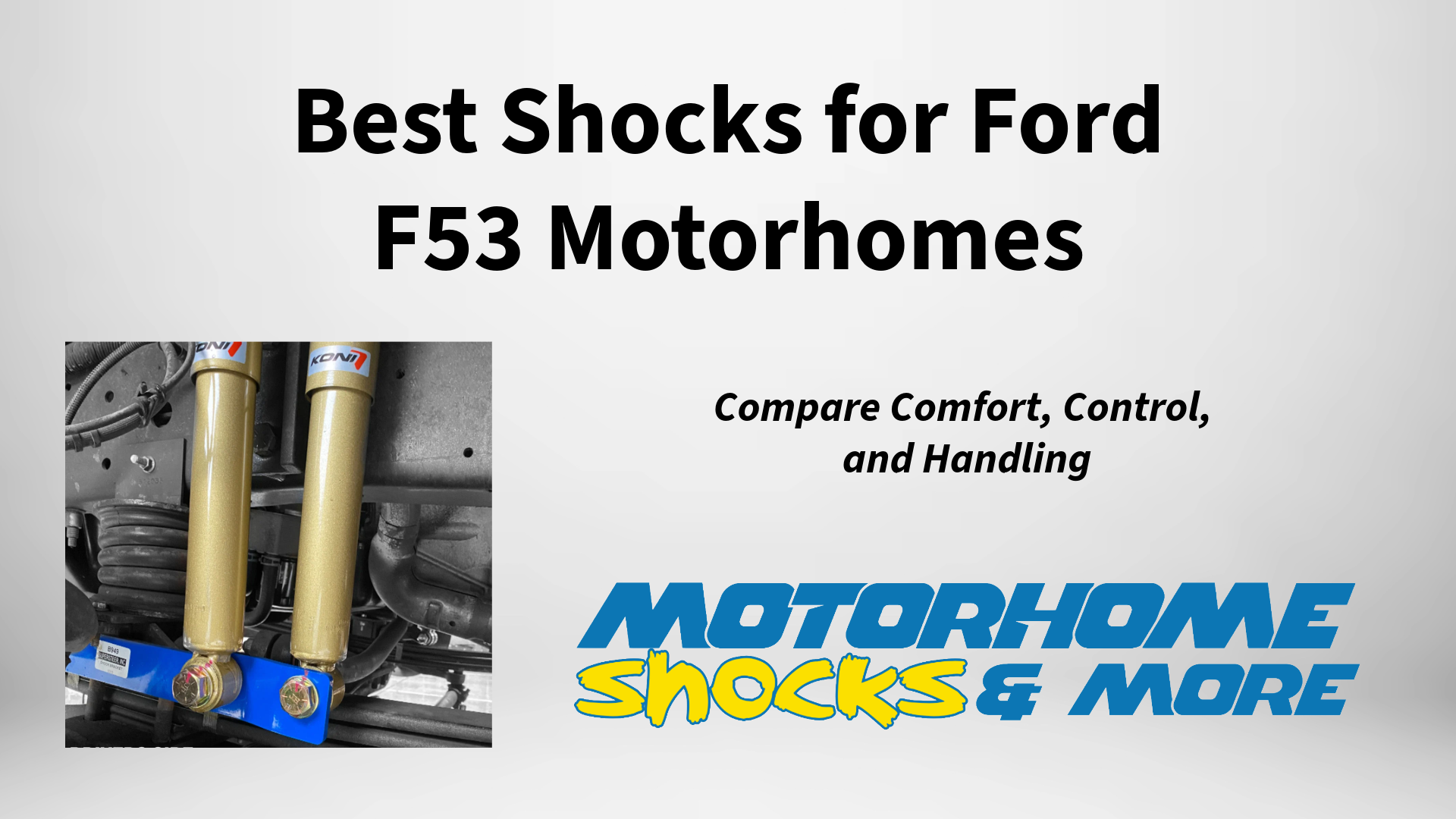
Best Shocks for Ford F53 Motorhomes
Choosing the best shocks for a Ford F53 motorhome starts with understanding coach weight, ride preferences, and handling problems. Compare Bilstein and KONI options, learn which shocks can improve performance, and determine when sway bars, trac bars, or steering upgrades may also be needed.