

Cart

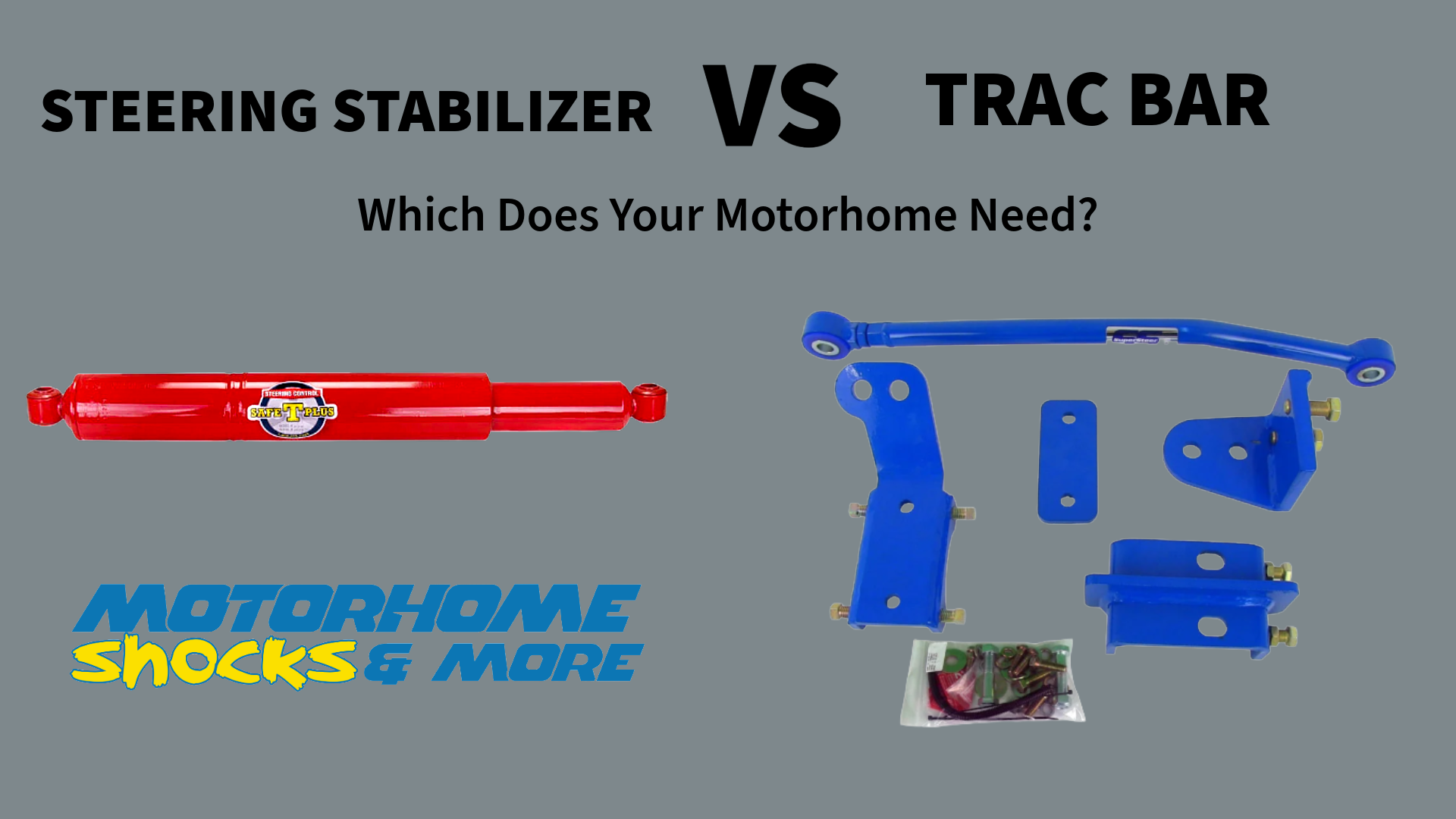
Understanding Your RV's Steering System
If your motorhome feels busy on the highway, you may wonder whether you need a steering stabilizer, a trac bar, or both. These parts often get mentioned together because both can improve motorhome handling. However, they do not solve the same problem.
One person may say your coach needs a steering stabilizer. Another may recommend a trac bar instead. Sometimes both recommendations are partly right. In other cases, one upgrade matters much more than the other.
The challenge is that the symptoms can feel similar from the driver's seat. Your coach may wander, react badly to passing trucks, or never settle into an easy straight-line rhythm. That makes it easy to assume these parts are interchangeable when they are not.
The simplest way to understand a steering stabilizer vs trac bar is to consider where each one works. A steering stabilizer mainly affects steering response and driver effort. A trac bar controls side-to-side axle movement beneath the coach.
Both can make a motorhome feel more controlled, but they accomplish that through different parts of the chassis.
In this guide, we'll explain what each part does, which symptoms point toward each one, and which upgrade may make more sense. You can also explore Motorhome Shocks & More and the RV Performance blog for additional motorhome handling information.
The Short Answer
A steering stabilizer can help a motorhome track more comfortably while reducing frequent steering corrections. A trac bar limits side-to-side axle movement so the chassis feels more planted and predictable.
That means a steering stabilizer mainly changes what you feel through the steering wheel. A trac bar mainly changes how securely the axle and chassis move together.
Both upgrades can improve highway confidence and reduce driver fatigue. They simply address different types of unwanted movement.
| Component | Primary Job | Often Helps With |
|---|---|---|
| Steering Stabilizer | Calms unwanted steering movement | Constant correction, rut tracking, crosswind steering effort and a busy steering wheel |
| Trac Bar | Limits side-to-side axle movement | Tail wag, rear steer, delayed chassis movement and sideways push |
What a Steering Stabilizer Does
A steering stabilizer mounts to the steering system and helps calm unwanted steering movement. Depending on the design, it may also provide a centering effect that encourages the steering to return toward straight ahead.
In real driving, this can reduce how much the front end reacts to wind, pavement grooves, road crown, or passing trucks. It may also reduce driver fatigue because you spend less time making constant corrections.
Motorhome Shocks & More discusses these symptoms in the steering wheel wandering vs. soft steering guide. You can also see this approach on products such as the Roadmaster Exact Center steering stabilizer, which is designed to provide steering control and centering assistance.
A steering stabilizer often makes sense when your complaint sounds like this:
- I'm constantly making small steering corrections.
- Crosswinds make the steering tiring.
- Grooved pavement and road ruts tug at the wheel.
- The coach takes too much effort to keep tracking straight.
- The front end feels busy and never quite relaxes.
A steering stabilizer does not fix worn steering components, incorrect alignment, or major side-to-side axle movement. Mechanical play and poor suspension geometry should be addressed first.
What a Trac Bar Does
A trac bar, also called a track bar or Panhard bar, connects the axle to the chassis. Its purpose is to reduce unwanted lateral axle movement.
In plain language, it helps prevent the axle from shifting side to side beneath the motorhome.
That movement may sound minor, but its effect can be very noticeable. When the axle shifts relative to the frame, the coach may feel delayed after a steering input or wind gust.
Some owners describe the sensation as tail wag, rear steer, or a floating rear end. The problem may feel like the coach is being steered from somewhere behind the driver.
The Roadmaster TruTrac bar guide explains how trac bars help control lateral axle movement while allowing normal suspension travel.
For Ford E-450 applications, products such as the SuperSteer SS451 Rear Trac Bar demonstrate how this type of upgrade addresses rear-end movement on Class C motorhomes.
A trac bar often makes sense when your complaint sounds like this:
- The rear of the coach pushes me around.
- The motorhome shifts sideways before it settles.
- Passing trucks move the whole coach off line.
- The chassis feels delayed after I turn the wheel.
- The body and axle do not seem tied together cleanly.
A trac bar does not replace shocks, and it does not perform the same job as a sway bar. It controls lateral axle movement rather than vertical bounce or body roll.
Steering Stabilizer vs Trac Bar by Symptom
If you're deciding between a steering stabilizer vs trac bar, match the upgrade to the symptom you notice most.
Choose a Steering Stabilizer First If
- Your main complaint is frequent steering correction or driver fatigue.
- The wheel feels busy in wind, on crowned roads, or in pavement grooves.
- You want the front end to feel calmer and more centered.
- The chassis is mechanically sound, but keeping the coach straight takes too much effort.
Choose a Trac Bar First If
- The RV feels like it gets shoved sideways, especially from the rear.
- Tail wag is more noticeable than steering-wheel kickback.
- The coach reacts late after a gust, truck blast, or lane change.
- The body and axle do not seem to move together cleanly.
Consider Both If
- The coach wanders and also gets pushed around from behind.
- You have a larger or taller motorhome with several handling complaints.
- One upgrade helps, but another layer of instability remains.
That last situation is common. Many motorhome handling problems have more than one source, especially on tall coaches using leaf-spring chassis.
Why Steering Stabilizers and Trac Bars Get Confused
A steering stabilizer and a trac bar can both make a motorhome feel more confident. That is why owners often group them together.
However, the improvement reaches the driver differently.
A steering stabilizer manages unwanted movement within the steering system. It can reduce the effort required to keep the wheels pointed where you want them.
A trac bar manages movement between the axle and chassis. It reduces the lateral shift that can make the entire coach feel vague or delayed.
If you only consider the final symptom, both upgrades may sound similar. A wandering coach could involve either part of the system.
The difference is the source of the movement. One upgrade controls steering reaction. The other controls chassis and axle movement that may contribute to that reaction.
What Neither Upgrade Fixes on Its Own
Before spending money on either upgrade, make sure the problem is not coming from a basic mechanical or setup issue.
Neither a steering stabilizer nor a trac bar will fix:
- Worn steering linkage
- Loose bushings or front-end hardware
- Incorrect tire pressures
- Poor weight distribution or loading
- Incorrect alignment
- Weak shocks that allow excessive bounce
- Excessive body roll better addressed by sway control
A motorhome with several overlapping problems can easily be misleading. For example, wandering may involve alignment, weak shocks, steering response, and rear axle movement at the same time.
Adding one correct upgrade may improve the coach without completely solving the complaint. That does not necessarily mean the part was wrong. It may mean another source of instability remains.
How Steering Stabilizers and Trac Bars Compare With Shocks and Sway Bars
Understanding the other major suspension components makes the difference between a steering stabilizer and trac bar much clearer.
Shocks
Shocks control suspension motion as the wheels move up and down. They reduce repeated bounce, porpoising, and lingering movement after bumps.
Better shocks can make a motorhome feel significantly more controlled. However, shocks do not specifically center the steering or locate the axle laterally.
Sway Bars
Sway bars resist body roll. They help reduce excessive leaning during turns, lane changes, driveway transitions, and crosswind events.
A sway bar can make the coach feel flatter and more stable. However, it does not provide steering centering or locate the axle like a trac bar.
Steering Stabilizers
Steering stabilizers reduce unwanted steering disturbance and can make straight-line driving easier. Their primary benefit is calming steering response and reducing driver workload.
Trac Bars
Trac bars reduce side-to-side axle movement so the chassis feels more planted. They help keep the axle located beneath the coach as outside forces push against it.
That is why one motorhome may need shocks for porpoising and sway bars for excessive body roll. Steering or axle-control upgrades may then address the remaining highway instability.
For additional symptom-based guidance, read the steering wheel wandering vs. soft steering guide.
Which Motorhomes Often Benefit Most From Each Upgrade?
Steering Stabilizers Are Often Popular On
- Gas Class A coaches that feel busy at highway speeds
- Class C motorhomes that require frequent steering corrections
- Motorhomes driven regularly in crosswinds or on grooved pavement
- RVs with tiring steering after tire pressure and alignment have been checked
Trac Bars Are Often Popular On
- Leaf-spring motorhomes with noticeable tail wag
- Longer coaches with significant rear overhang
- Class C motorhomes where rear movement seems to influence steering
- Larger coaches where the chassis feels like it moves separately from the axle
For example, the E-450 steering and sway guide discusses steering stabilization, sway control, shocks, and rear trac bars for Class C motorhomes.
How to Decide Which Upgrade to Make First
If you can only make one handling upgrade right now, ask yourself one question: Where do I feel the problem most?
If you feel it mainly through the steering wheel, first check tire setup, alignment, and front-end condition. Then consider whether a steering stabilizer matches the remaining complaint.
If you feel the problem through the coach, especially from the rear, investigate whether lateral axle movement could be contributing.
If you're still unsure, work through the basics first:
- Confirm tire pressures and travel loading.
- Inspect steering and suspension components for wear.
- Verify alignment.
- Identify the handling symptom that remains.
- Choose the upgrade designed to control that type of movement.
This order matters because neither a steering stabilizer nor a trac bar should cover up worn parts or an incorrect setup.
Can One RV Benefit From Both?
Yes. A steering stabilizer and a trac bar are not competing versions of the same product. They control different parts of the system.
A larger Class A or long Class C may experience more than one type of instability. The front end may feel busy while rear axle movement contributes to tail wag.
In that situation, a steering stabilizer may reduce driver workload. A trac bar can make the chassis feel more direct and better tied together.
That does not mean every motorhome needs both upgrades.
The right solution depends on whether your coach has one dominant problem or several smaller ones. If one upgrade solves the complaint, there is no reason to add parts simply because other owners did.
If the first improvement reveals another weakness, building the suspension package in stages can make sense.
This staged approach can also make shopping easier. Start with the problem that bothers you most, make the appropriate improvement, and then reevaluate the motorhome before moving on.
Steering Stabilizer vs Trac Bar: Which Does Your Motorhome Need?
When comparing a steering stabilizer vs trac bar, the biggest difference is straightforward. A steering stabilizer controls unwanted steering movement. A trac bar controls unwanted side-to-side axle movement.
If your motorhome feels busy through the steering wheel, investigate the steering side first. If the whole coach feels pushed sideways or seems to steer from the rear, a trac bar may deserve more attention.
Some larger motorhomes can benefit from both because the components solve different problems. The goal is not to install every available upgrade. It is to identify each source of unwanted movement and address it in the right order.
To keep comparing your options, start with the steering wheel wandering vs. soft steering guide, browse the RV Performance blog, or explore chassis-specific suspension and steering products at Motorhome Shocks & More.


